Open Space Facilitation Europe
How do you get 80 people to engage with a challenge no one can solve alone?
In an Open Space the participants build the agenda themselves, around a question that matters. For public bodies, EU institutions, companies and large non-profits, and for community events and unconferences, across Belgium, the Netherlands and Europe.
The success of an Open Space is decided weeks in advance: by an urgent question, clear givens and a sponsor who stands behind it.
Experience: the Lean Startup Summit Amsterdam (2018, co-facilitated) and an in-company Open Space at a large bank (2018). Planned: the Scrum Event on 19 November 2026 in Utrecht.
Groups from 20 to around 200 participants, in person and online. See the cases with participant numbers.
What I do
Conferences & unconferences
For professional conferences and community events of 30 to 200 participants.
Public sector
For public bodies that have to move forward together.
Organisational transformation
For mergers, reorganisations and agile or AI transitions.
Strategic sessions
For leadership teams and boards that want to hear every voice.
What brings an Open Space to life

You might not expect it, but the success of an Open Space depends on the preparation. Together with the client I look for the urgent question that needs answering. We look at which conditions are needed, and at the givens: what has already been decided, how leadership stands towards it, and where the boundaries lie.
That sounds like the opposite of freedom. It is the condition for it. People who know where the boundaries are dare to use the space between them.
On the day, the group opens in a circle. A good question and an honest invitation speak to what drives people themselves. Anyone who wants to raise something walks to the centre, writes it down and puts it on the wall: the marketplace. That is how a group builds its own agenda in half an hour. This is not a game: it is how the principles of Open Space come to life. People choose where to contribute, and whoever starts a conversation carries it. That is where change begins.
That can be half a day within your programme, a full day, several days or online. See the formats.
Open Space as a strategic instrument
A challenge with many stakeholders does not start on the day of the session, and it does not stop there. The answer is spread across many people. Open Space brings them together around one question and lets them choose what to talk about. That is why it works where a fixed programme falls short.
The structure is small: a central question, and participants who build the agenda around it themselves. What comes out of it are commitments people stand behind, and work that continues after the day.
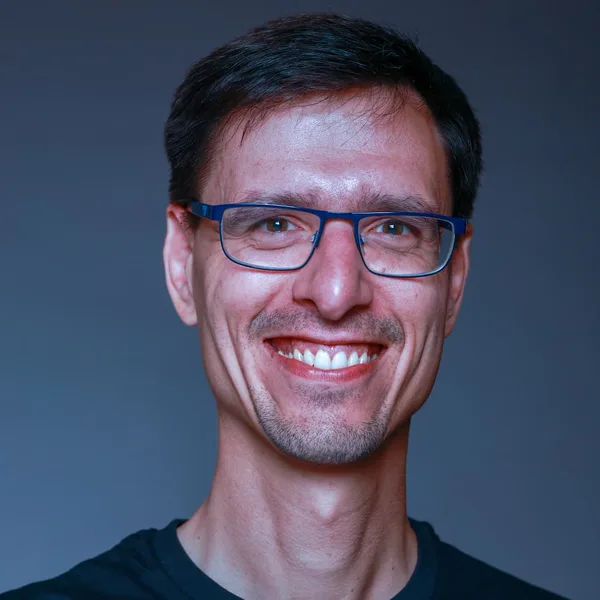
I organised and facilitated my first Open Space in 2017: LeanCamp in Brussels. I am trained in an Open Space Leadership Workshop, assisted the facilitator at the Global Scrum Gathering in Lisbon in 2022, and take part in the international Open Space on Open Space community. More about that.
Not sure whether Open Space fits your challenge? Read when I advise against it.